

ERP Software Explained: Top Systems to Grow Your Business in 2026
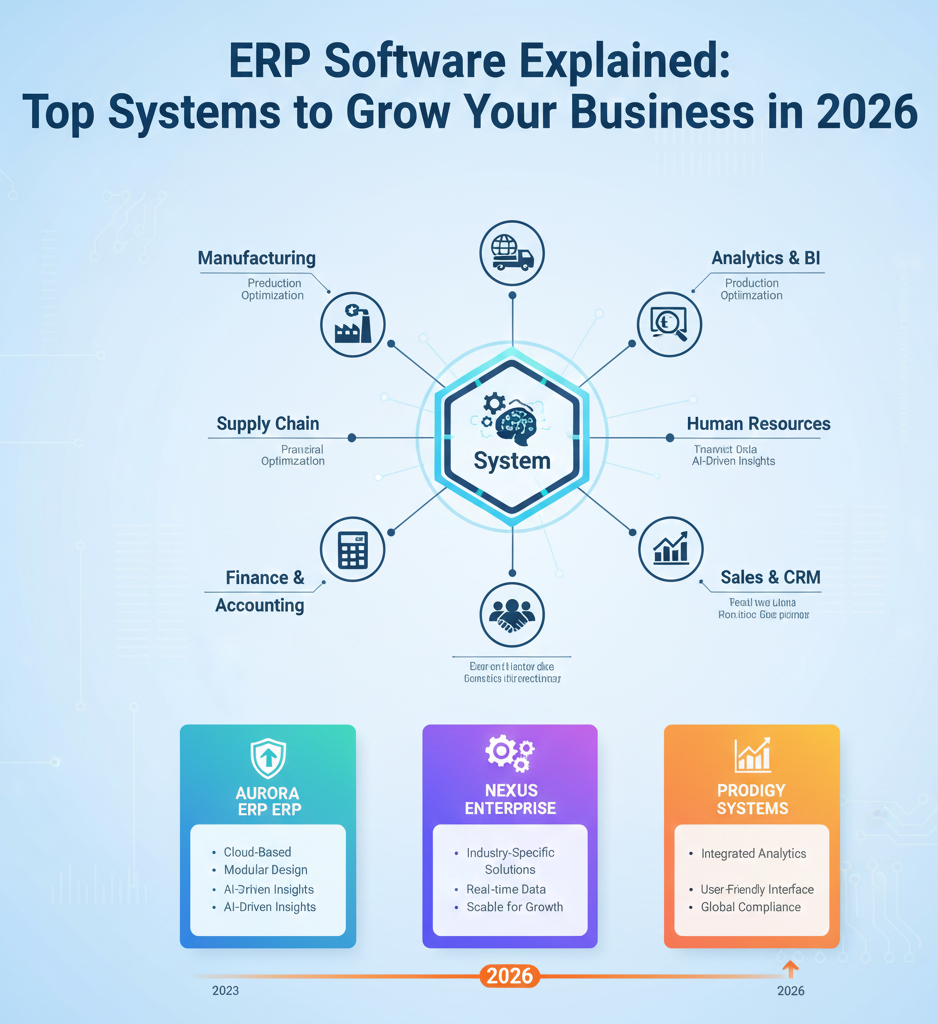
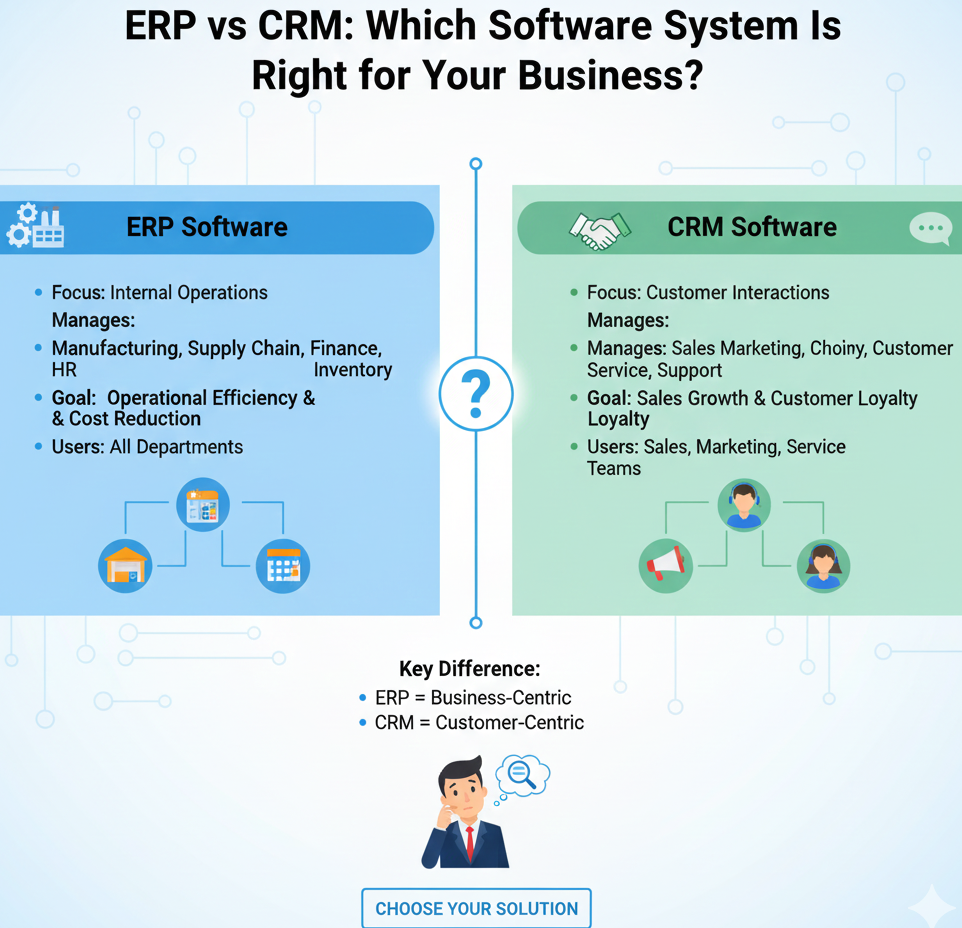
Enterprise Resource Planning (ERP) software has become the backbone of modern business operations. Once reserved for large corporations with big budgets and dedicated IT teams, ERP systems are now accessible, affordable, and powerful even for small to mid-sized companies. As businesses grow more complex in 2026, having a unified platform that connects finance, inventory, HR, sales, and more is no longer optional—it’s essential.
This guide breaks down what ERP software is, why it matters for business growth, and the top systems worth considering in 2026.
What Is ERP Software?
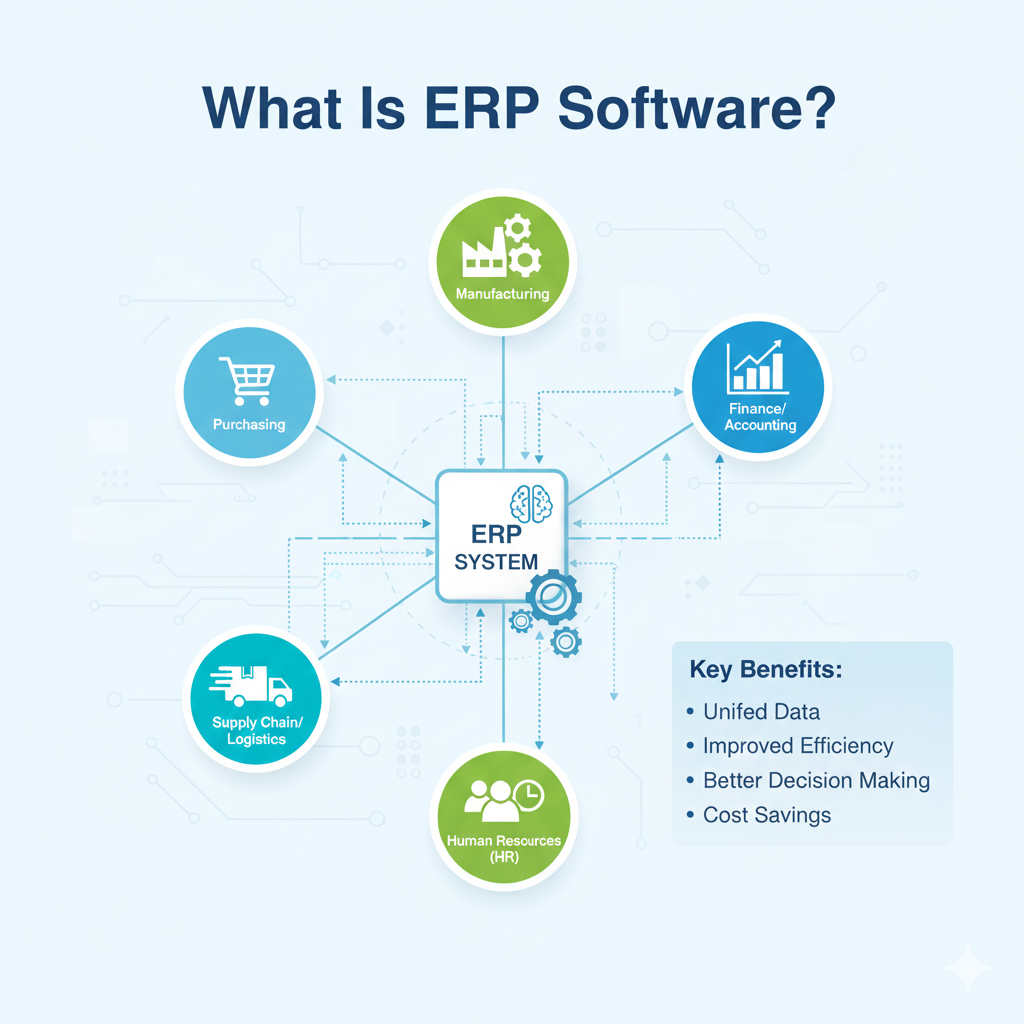
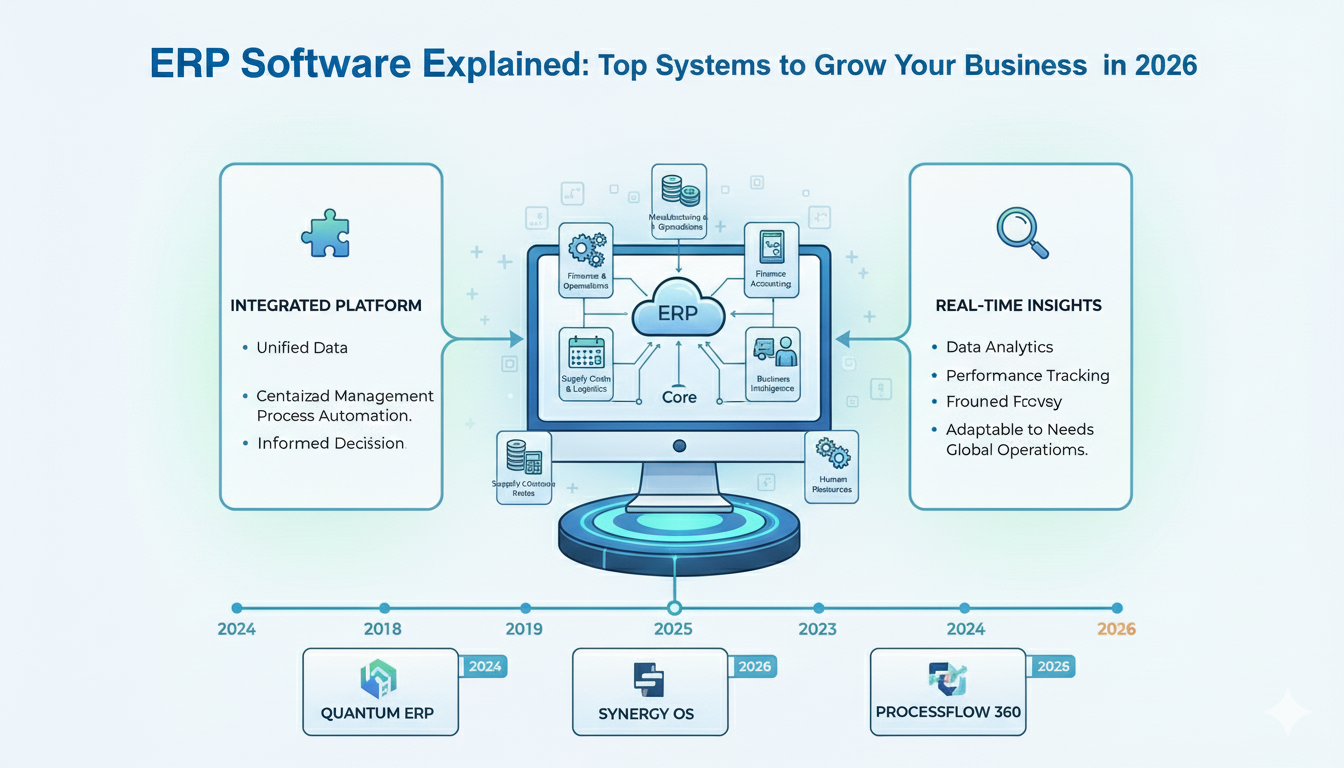
ERP stands for Enterprise Resource Planning. At its core, ERP software is a suite of integrated applications that manage day-to-day business activities across multiple departments. Instead of operating in isolated silos—where accounting, inventory, sales, and HR all use separate systems—ERP brings everything into one centralized platform.
The result?
-
Real-time visibility into operations
-
Improved data accuracy
-
Faster decision-making
-
Streamlined workflows
-
Better scalability for growth
In an era dominated by digital transformation, ERP software helps businesses stay competitive by connecting processes and people.
Key Benefits for Growing Businesses
1. Unified Data Across Departments
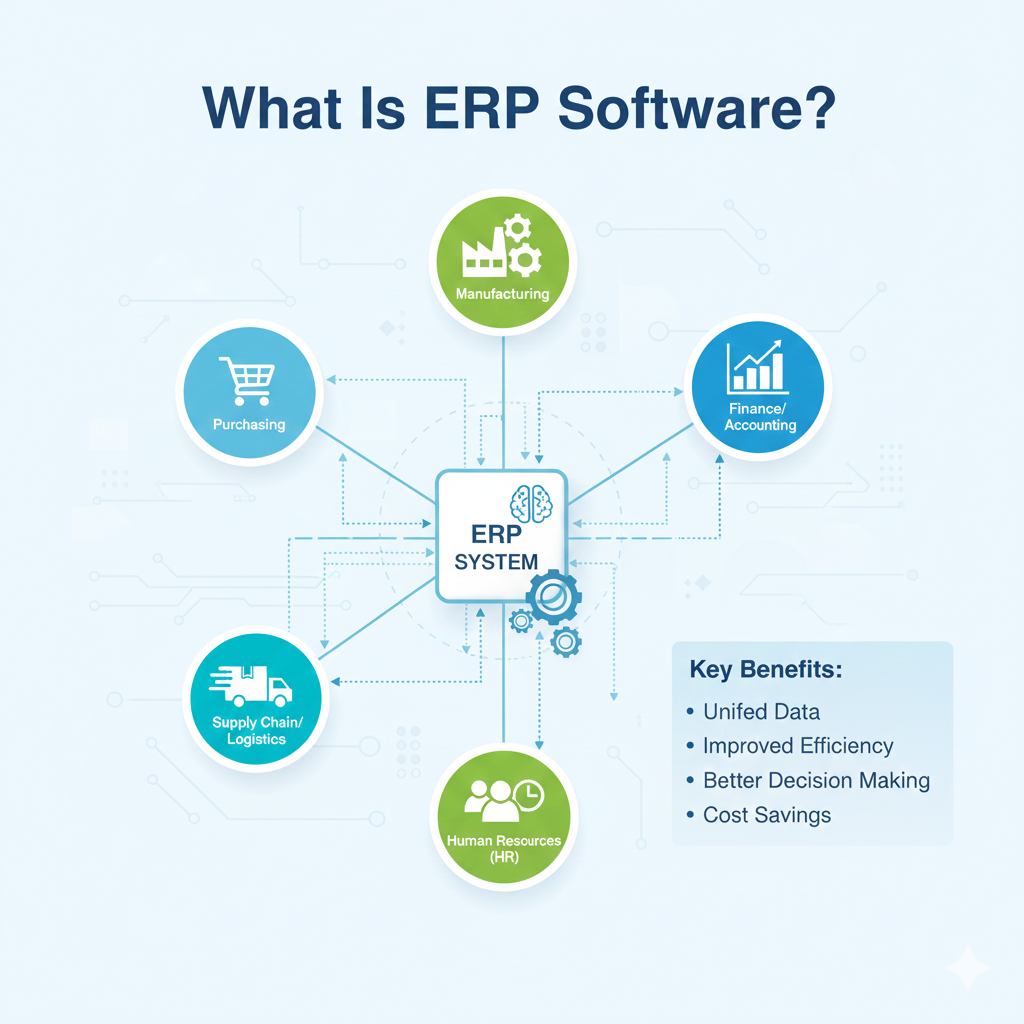
With all business functions using the same data source, teams work from a single, reliable version of the truth. That means fewer errors and faster insights.
2. Automated Processes
Manual tasks—like data entry, reporting, or reconciliation—are automated, freeing up time for team members to focus on strategic work.
3. Scalability
ERP systems grow with your business. Whether adding new products, locations, or employees, an ERP platform can adapt without creating chaos.
4. Better Financial Control
With integrated financial tools, businesses can monitor cash flow, budgets, and compliance in real time, ensuring stronger financial health.
5. Enhanced Collaboration
ERP eliminates data silos, enabling departments to collaborate more effectively, from procurement to customer support.
Top ERP Systems for 2026
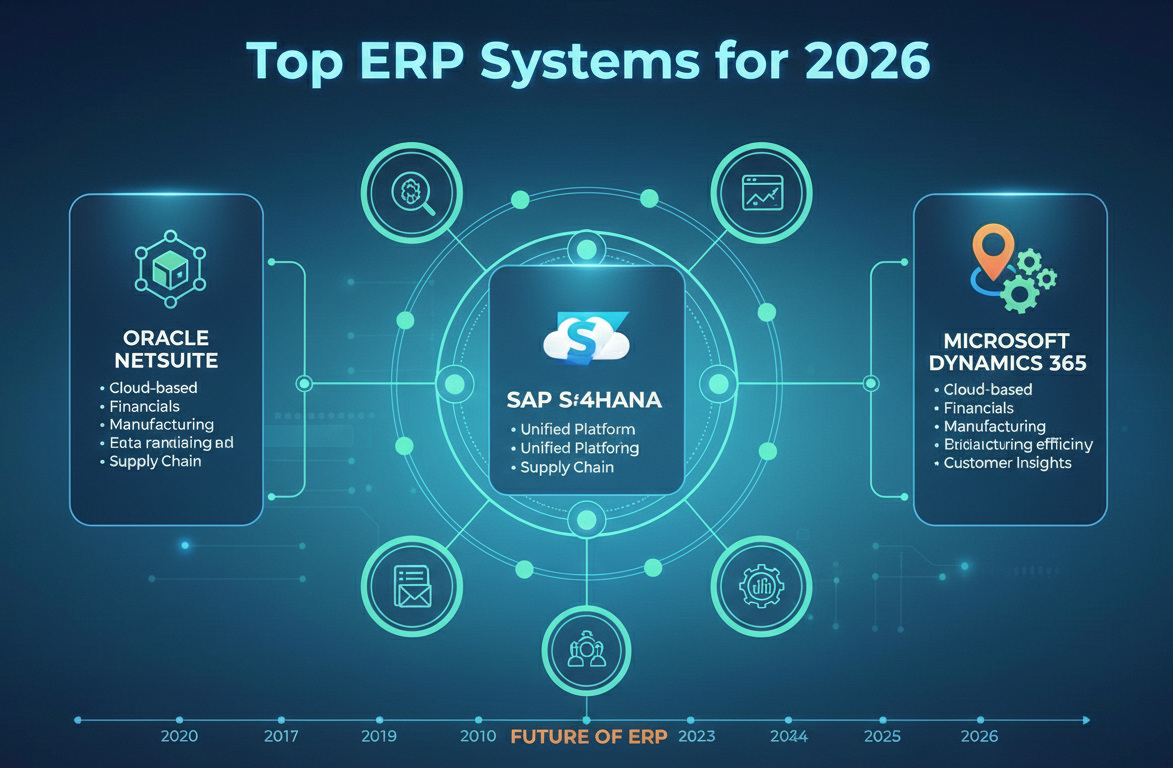
Here’s a look at some of the best ERP platforms available today, each suited to different business needs and sizes.
1. SAP S/4HANA
Best for: Large enterprises and global operations
Why it stands out:
SAP S/4HANA delivers advanced analytics, real-time processing, and robust modules covering finance, supply chain, manufacturing, and more. Its intelligent features, powered by in-memory computing and AI, help businesses respond to change faster.
Ideal if: Your business has complex operations and needs deep customization.
2. Oracle NetSuite
Best for: Growing mid-sized companies
Why it stands out:
NetSuite’s cloud-based suite includes financials, CRM, ecommerce, inventory, and more. Its strength lies in scalability and visibility across business units, making it a popular choice for companies ready to expand internationally.
Ideal if: You want a single platform that can manage multiple functions without significant IT overhead.
3. Microsoft Dynamics 365
Best for: Businesses invested in Microsoft ecosystem
Why it stands out:
Dynamics 365 blends ERP and CRM capabilities in a flexible, modular platform. Integration with Microsoft tools like Teams, Power BI, and Azure gives businesses a seamless digital experience and strong analytics.
Ideal if: Your business relies on Microsoft tools and wants a unified productivity stack.
4. Odoo
Best for: Small to mid-sized businesses on a budget
Why it stands out:
Odoo’s modular approach lets companies start with essential functions and add more as needed. Its open architecture, user-friendly design, and competitive pricing make it an attractive choice for cost-conscious organizations.
Ideal if: You want flexibility and a low entry cost without sacrificing core functionality.
5. Infor CloudSuite
Best for: Industry-specific solutions
Why it stands out:
Infor CloudSuite offers ERP systems tailored to sectors such as manufacturing, healthcare, and retail. Deep industry functionality and analytics put specialized capabilities at your fingertips.
Ideal if: Your business operates in a niche industry with specific software requirements.
How to Choose the Right ERP System for Your Business
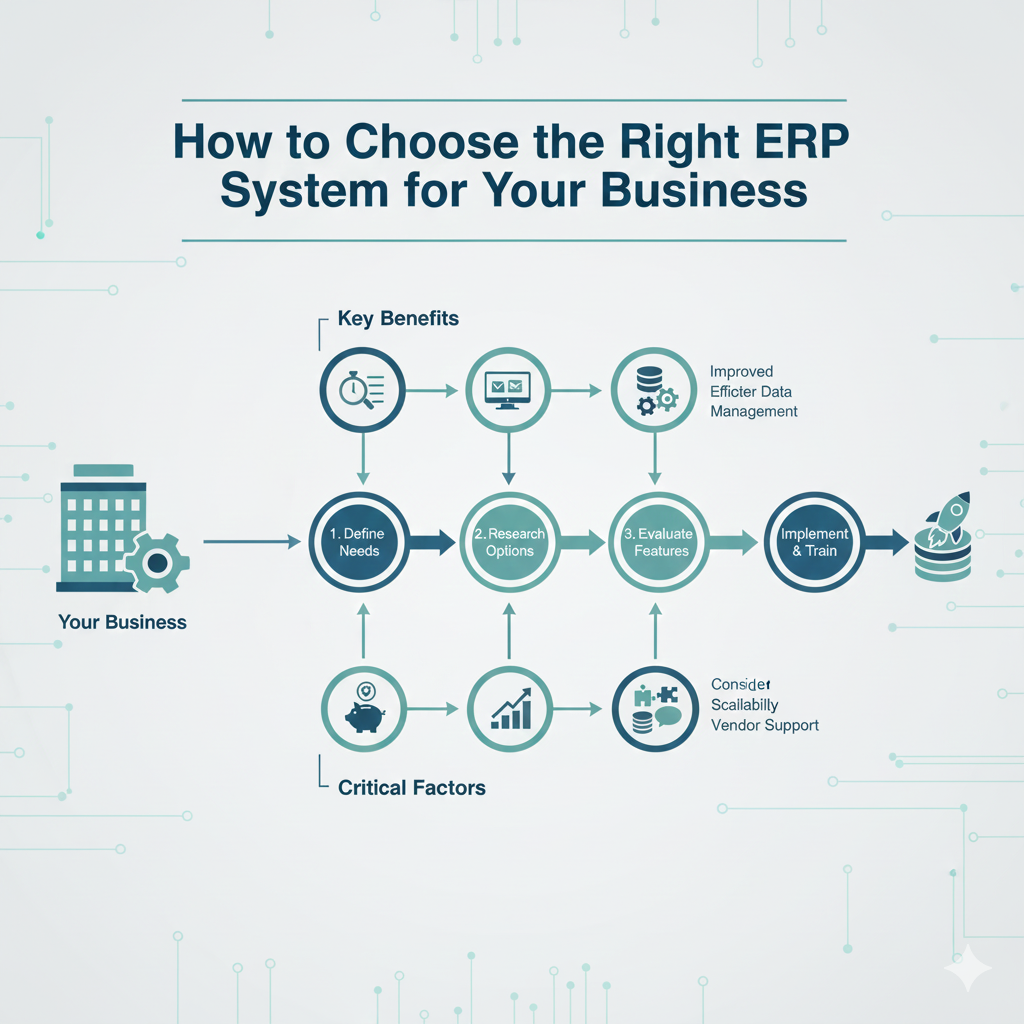
Selecting an ERP system is a major decision. Consider the following:
1. Business Size & Growth Plans
Choose a system that aligns with both your current needs and future ambitions.
2. Industry Requirements
Some ERPs offer modules built for specific industries. Evaluate whether your business can benefit from tailored features.
3. Budget & Total Cost of Ownership
ERP costs include software licenses, implementation, training, and maintenance. Factor in long-term expenses, not just upfront fees.
4. Ease of Use
User adoption matters. Tools with intuitive interfaces and strong support resources will deliver better ROI.
5. Integration Needs
Ensure the ERP system integrates with your existing tools—especially CRM, ecommerce, and business intelligence platforms.
Final Thoughts

ERP software is no longer just for giants with massive IT budgets. In 2026, modern ERP systems offer accessible, scalable solutions that help businesses of all sizes improve efficiency, unify data, and drive smarter decisions.
Choosing the right ERP takes careful evaluation, but the payoff is substantial: better control over your operations, faster response times, and a technology platform that grows with your business.
Whether you’re exploring ERP for the first time or considering an upgrade, this guide gives you a solid starting point—helping you pick a system that supports your goals and elevates your competitive edge.